


Sloped landscapes are one of the most challenging environments for weed control and soil stability. Gravity works against you—pulling soil, mulch, and even poorly installed materials downhill over time.
Landscape fabric is often recommended as a solution, but many homeowners end up frustrated when it shifts, tears, or fails to stop erosion.
So, what actually works on slopes?
The short answer: the right fabric, proper anchoring, and a well-planned layering system.
Contents []
Why Slopes Are Different

Flat garden beds are forgiving. Slopes are not.
On an incline, you’re dealing with:
- Soil erosion from rain runoff
- Mulch displacement
- Weed seeds washing downhill
- Increased tension on materials
This means standard, lightweight landscape fabric often isn’t enough.
What Landscape Fabric Does Well on Slopes
When used correctly, landscape fabric can:
1. Reduce Soil Erosion
It acts as a stabilizing layer, holding soil in place while allowing water to pass through.
2. Suppress Weed Growth
Blocks sunlight and slows weed emergence especially important on hard-to-maintain slopes.
3. Improve Water Distribution
Helps prevent rapid runoff by allowing gradual water infiltration.
But here’s the catch: fabric alone isn’t a complete solution.
What Type of Landscape Fabric Works Best?
1. Woven Fabric (Top Choice)

Woven landscape fabric is made from tightly interlaced polypropylene fibers.
Why it works:
- High tensile strength (resists tearing on slopes)
- Excellent erosion control
- Allows water through while holding soil
Best for: Long-term slope stabilization and heavy-duty applications
2. Non-Woven Fabric (Secondary Option)
Non-woven fabric is more felt-like and typically better for drainage than strength.
Pros:
- Good water permeability
- Useful in drainage-heavy areas
Cons:
- Less resistant to shifting and tearing on slopes
Best for: Gentle slopes or as part of a layered system
3. Spun-Bond Fabric (Not Ideal Alone)
Lightweight and commonly used in garden beds.
Problem:
Too weak for slopes—prone to tearing and displacement.
Choosing the Right Thickness
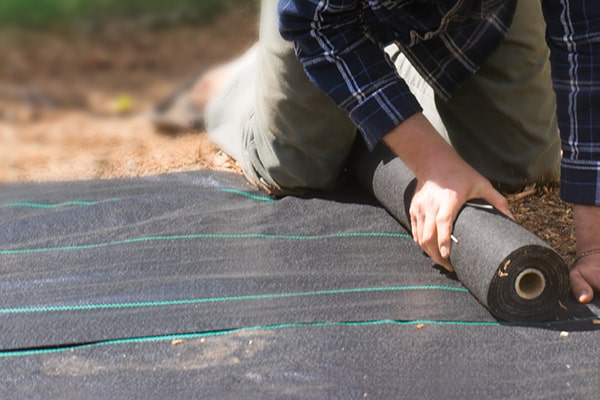
Thickness (measured in oz/yd²) matters even more on slopes.
- Under 2 oz: Too weak—avoid for slopes
- 3–5 oz: Ideal for most residential slopes
- 5+ oz: Best for steep slopes or erosion-prone areas
Rule: The steeper the slope, the heavier the fabric you need.
The Real Secret: It’s Not Just the Fabric
Most failures happen not because of the material but because of poor installation.
A fabric-only approach will fail.
To make it work, you need a system.
The Correct Layering System for Slopes
Step 1: Prepare the Slope
- Remove weeds and roots
- Grade the soil evenly
- Compact lightly to reduce shifting
Step 2: Lay the Fabric Horizontally
Always install fabric across the slope (like contour lines)—not vertically.
This:
- Reduces water runoff speed
- Prevents fabric from pulling downhill
Step 3: Overlap Generously
- Overlap edges by at least 8–12 inches
- On steep slopes, increase overlap further
Step 4: Anchor Aggressively
Use landscape staples:
- Every 1–2 feet on slopes
- Closer spacing on steeper inclines
Step 5: Add a Top Layer
Never leave fabric exposed.
Use:
- Bark mulch (shredded works best for grip)
- Wood chips
- Gravel (for heavy-duty areas)
This layer:
- Protects against UV damage
- Adds weight to hold everything in place
- Prevents weeds from growing on top
Best Materials to Pair with Fabric on Slopes

1. Shredded Mulch (Highly Recommended)
- Interlocks better than large bark pieces
- Less likely to slide downhill
2. Erosion Control Blankets (Advanced Option)
- Biodegradable mats placed over fabric
- Ideal for steep or newly planted slopes
3. Ground Cover Plants (Long-Term Solution)
- Plants like creeping juniper or vinca minor
- Roots eventually stabilize the soil better than fabric alone
Common Mistakes That Cause Failure
1. Using Lightweight Fabric
It tears and shifts quickly under stress.
2. Installing Fabric Vertically
Water flows straight down and pulls the fabric with it.
3. Not Using Enough Anchors
Insufficient staking leads to movement and gaps.
4. Skipping the Top Layer
Exposed fabric degrades and allows weeds to grow on top.
5. Expecting Permanent Results
Even the best setup needs occasional maintenance.
Landscape Fabric vs Alternatives for Slopes

| Solution | Effectiveness | Longevity | Maintenance | Best Use Case |
|---|---|---|---|---|
| Landscape Fabric + Mulch | High | Medium–High | Moderate | Most residential slopes |
| Erosion Control Blankets | Very High | Short–Medium | Low | Newly graded or steep slopes |
| Ground Cover Plants | Very High | Long-term | Low | Permanent, natural stabilization |
| No Barrier | Low | N/A | High | Not recommended |
Final Verdict: What Actually Works?
Landscape fabric can work on slopes—but only when used as part of a complete system.
What Works:
- Woven, heavy-duty fabric (3–5 oz or more)
- Horizontal installation with strong anchoring
- Covered with mulch or gravel
- Combined with plants for long-term stability
What Doesn’t:
- Thin, cheap fabric
- Poor anchoring
- No top layer
- Expecting zero maintenance
Bottom Line
If your goal is erosion control and weed suppression on a slope:
- Fabric is a tool not a standalone solution
- Installation quality matters more than material alone
- Long-term success comes from combining fabric with mulch or plants
Done right, landscape fabric can stabilize slopes effectively. Done wrong, it becomes another layer of frustration sliding downhill.


